

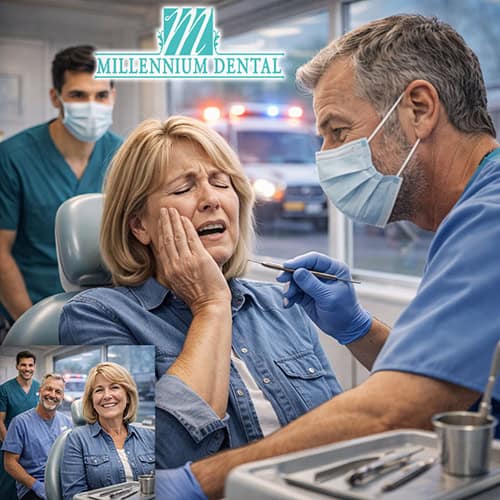
Types of Dental Care at Millennium Dental Clinic in Encinitas, CA
Dental care is generally divided into three main categories: preventive (routine), urgent, and emergency care. Each type differs in timing, medical indications, and the level of intervention required. Understanding these differences helps patients properly assess their condition and seek care at the right time.
At Millennium Dental Clinic in Encinitas, CA, we provide all three types of dental services. Our experienced team welcomes patients both by scheduled appointments for routine care and on short notice when dealing with pain, trauma, or inflammation. Below, we explain each category in detail.
Preventive & Routine Dental Care
Routine dental care includes all preventive and planned treatments scheduled in advance. Patients visit at a convenient time, where the dentist performs a comprehensive examination, creates a personalized treatment plan, and completes necessary procedures.
The primary goal of routine care is to maintain oral health and prevent dental problems before they become serious. Regular check-ups every six months allow dentists to detect early-stage cavities and issues that can be treated quickly—often within 30–40 minutes—and at a lower cost. Delayed treatment can lead to more complex procedures, additional visits, and higher expenses.
Routine care is performed in a comfortable, controlled environment. The dentist explains each step, selects appropriate anesthesia, and ensures every stage of treatment is carefully managed. Patients have time to prepare both mentally and financially.
What’s Included in Routine Care
Routine dental services include both preventive and restorative procedures. Preventive care focuses on avoiding dental issues, while restorative treatments address existing concerns.
Each patient receives a customized care plan based on the condition of their teeth, gums, and bite alignment. The frequency of visits is determined individually:
- Patients with healthy oral conditions typically need two check-ups per year
- Patients with periodontal disease, dental implants, or orthodontic appliances may require visits every 3–4 months
Emergency Dental Care
Emergency dental care is required for conditions that may pose a serious risk to a patient’s health or life. These situations demand immediate attention and cannot be delayed.
Examples include:
- Uncontrolled bleeding after tooth extraction
- Jaw fractures
- Severe infections with risk of spreading to surrounding tissues
In emergency situations, patients are treated immediately, without delay or appointment requirements. The primary goal is to stabilize the patient, eliminate immediate danger, and prevent further complications.
After stabilization, patients are referred for continued treatment under a structured care plan.
Urgent Dental Care
Urgent dental care addresses conditions that cause significant pain or discomfort but are not life-threatening. These are the most common situations patients experience.
Typical urgent conditions include:
- Severe tooth pain that does not respond to pain medication
- Acute pulpitis or infection
- Periodontal flare-ups
- Dental trauma without jaw fracture
- Broken or dislodged crowns, fillings, or temporary restorations
At Millennium Dental Clinic, patients with urgent conditions are seen as quickly as possible—often the same day or within a short timeframe after contacting the office.
During the visit, the dentist will:
- Perform a full examination
- Relieve pain
- Address the immediate cause
- Provide temporary or definitive treatment
- Develop a follow-up treatment plan
Common Signs You Need Urgent Care
- Severe Tooth Pain
Persistent, throbbing pain that may radiate to the ear or temple and worsen at night. - Swelling of Gums or Face
Visible swelling, redness, or fever associated with infection. - Dental Trauma
Cracked, chipped, or loosened teeth after injury, often accompanied by bleeding. - Broken Restorations
Lost crowns, damaged dentures, or broken orthodontic appliances causing discomfort or injury.
Emergency vs. Urgent Dental Care
Patients often confuse emergency and urgent dental situations. While both require prompt attention, they differ in severity and urgency.
The distinction is not always obvious. If you are unsure about the seriousness of your condition, it is always best to seek immediate guidance. Acting quickly can prevent complications.
For example:
- A swollen cheek due to infection is typically considered urgent
- However, if swelling spreads rapidly, affects the neck, or interferes with breathing or swallowing, it becomes a medical emergency requiring immediate hospital care
Where to Seek Immediate Dental Care
For true emergencies, patients should:
- Call emergency services or
- Visit the nearest hospital with oral and maxillofacial specialists
For urgent dental needs, patients can contact a dental clinic directly. At Millennium Dental Clinic in Encinitas, we strive to accommodate urgent cases as quickly as possible.
Same-Day Urgent Dental Care
At Millennium Dental Clinic, patients experiencing acute dental pain can often be seen the same day. Simply call our office, describe your symptoms, and our team will schedule the earliest available appointment.
During your visit, we will:
- Diagnose the issue
- Provide immediate pain relief
- Perform necessary treatment
- Create a personalized plan for long-term care
Your Comfort and Health Come First
At Millennium Dental Clinic in Encinitas, CA, your comfort, safety, and oral health are our top priorities. Whether you need routine care, urgent treatment, or emergency assistance, our team is here to provide professional, compassionate, and timely dental care.
Comments closed
No comments. Leave first!